
STATE CİVİL AVİATİON AGENCY
UÇUŞLARIN TƏHLÜKƏSİZLİYİNİN İDARƏ EDİLMƏSİ QRUPU
SAFETY MANAGEMENT SYSTEM (SMS)
Minutes of the Meeting held on 26 May 2025
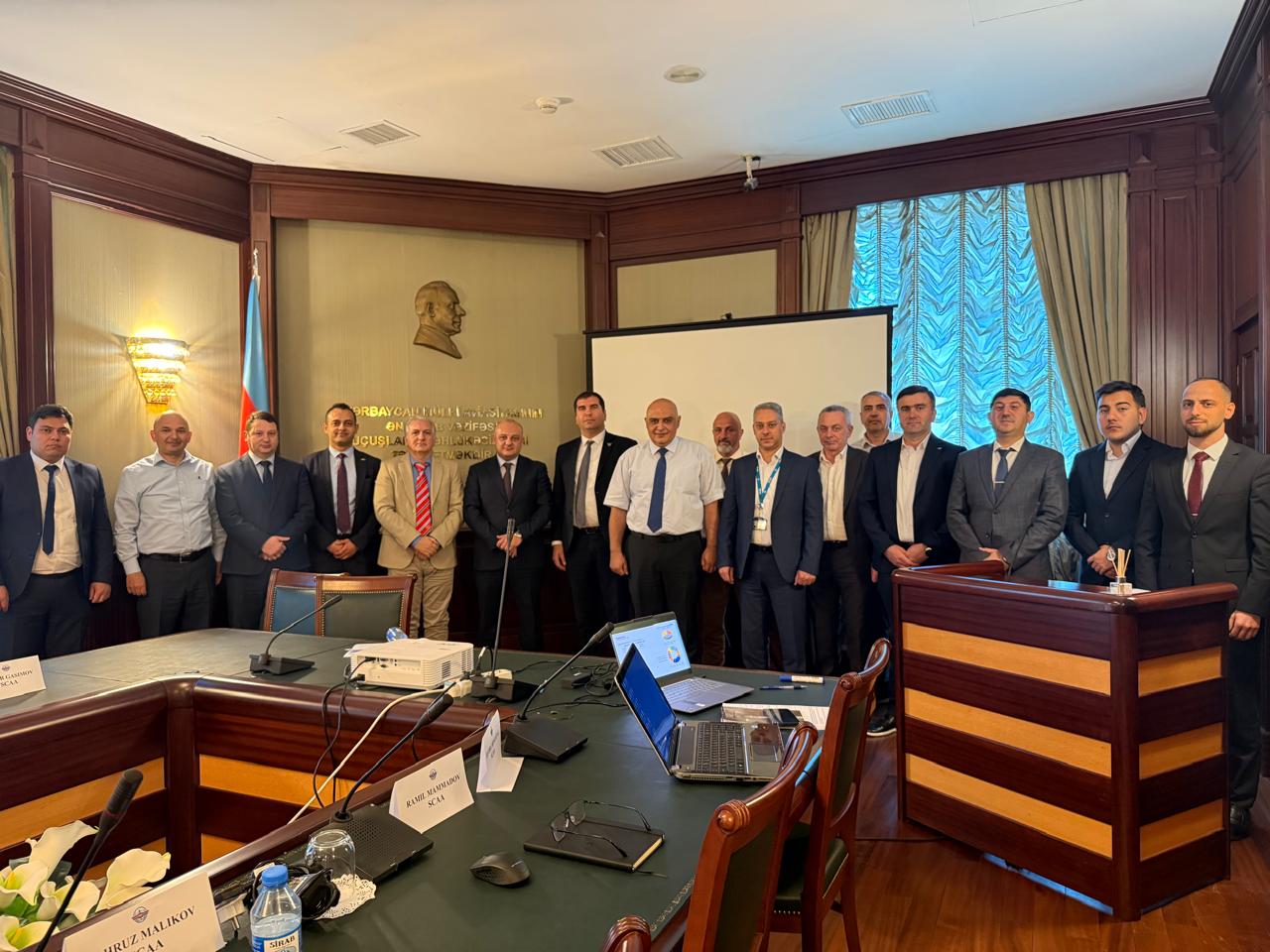
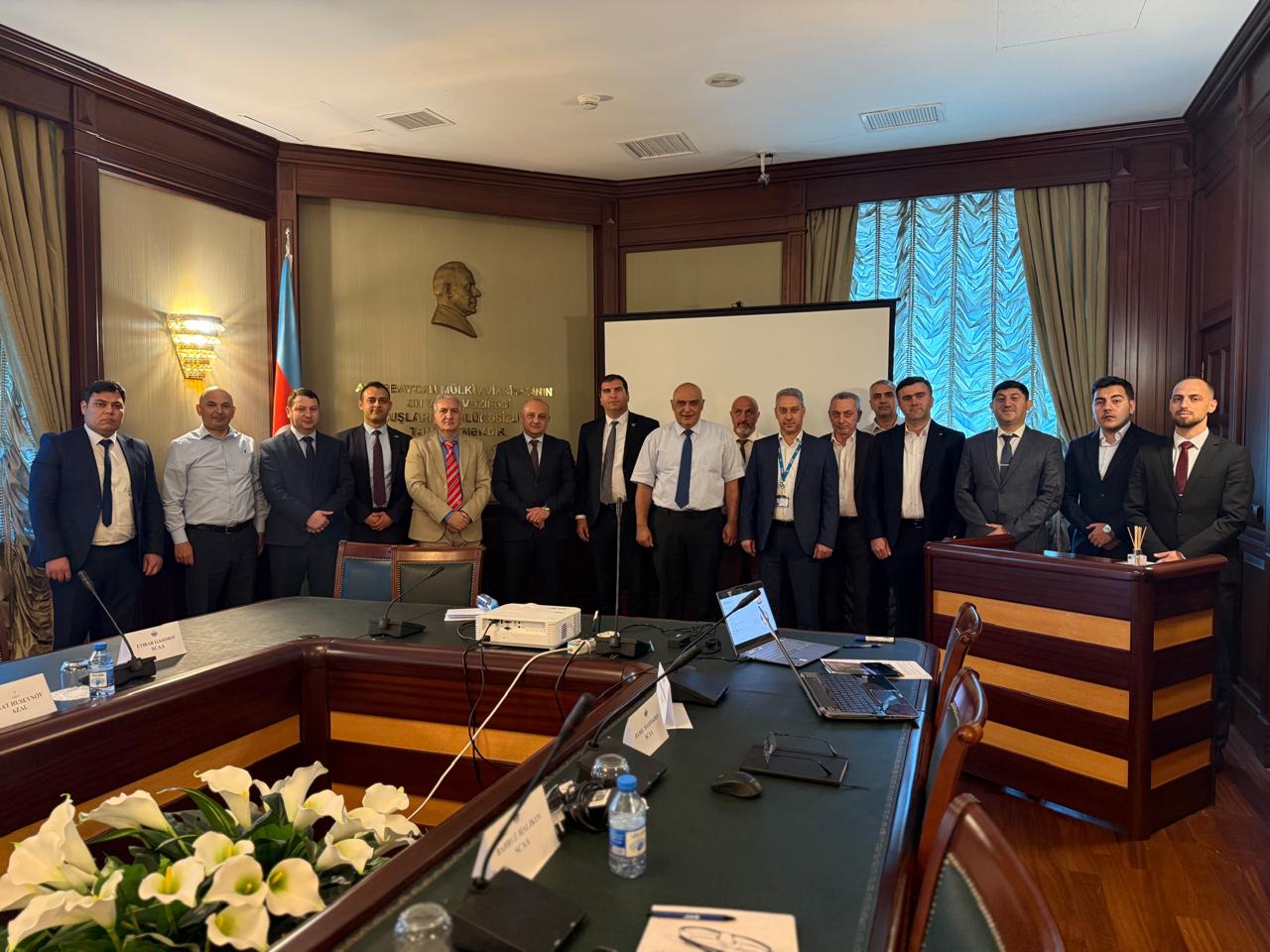
On May 26, 2025, a working meeting was held at the State Civil Aviation Agency of the Republic of Azerbaijan with aviation operators and other key stakeholders of the aviation sector.
The primary objective of the meeting was to review the current status of implementation of the Safety Management System (SMS), to exchange practical observations, and to align approaches for further development of the system in line with ICAO Standards and Recommended Practices (Annex 19, Doc 9859), as well as national regulatory documents.
This event was part of a broader strategy aimed at strengthening active engagement with industry stakeholders to enhance the overall level of aviation safety and ensure compliance with ICAO requirements.
The meeting was attended by responsible managers and specialists from the State Civil Aviation Agency involved in SMS implementation and oversight, as well as representatives of commercial operators, maintenance organizations, and airports. This was the first time such a format — involving all interested parties — was organized, and it generated significant interest within the professional community.
During the event, participants were introduced to Safety Performance Indicators (SPIs) developed to assess the level of SMS implementation and the resilience of safety assurance processes. They were also briefed on a newly developed safety management program. Additionally, discussions were held on a future web-based project designed to support bilateral data exchange and provide tools for updated risk assessment and management methods. The SPI model presented includes an automated feature to assess the maturity of an organization’s SMS. The new system is intended to cover all areas of the aviation industry. The SPI framework includes elements such as staff engagement in safety management and the integration of SMS into operational activities. The system is expected to serve as both a self-assessment tool for operators and a means of effective interaction with the oversight authority regarding SMS implementation.
As part of the meeting, results achieved in 2024 were reviewed, and key directions for 2025 were discussed. These include increasing the participation of safety departments from AMOs, CAMOs, and aerodromes in oversight activities, and enhancing coordination mechanisms during the execution of safety management functions. Participants emphasized the importance of establishing a unified approach to interpreting and applying SMS requirements across different types of organizations. Also on the agenda was the need to develop a unified regulatory framework in accordance with both international standards and national legislation. Proposals were made to develop additional guidance materials to support service providers during SMS implementation. The practical applicability of these documents, their alignment with the scope and nature of operations, and consistency with existing state acts were highlighted as key criteria.
Particular attention was paid to the topic of safety culture. The role of internal reporting systems as a fundamental element of an effective SMS was discussed in detail. The importance of clear and transparent procedures that encourage staff to actively participate in identifying and mitigating risks — as well as the establishment of continuous feedback mechanisms — was strongly emphasized.
In the context of oversight activities, a shift was discussed from a purely compliance-based approach toward a more flexible, risk-based model. This transition is consistent with global aviation safety trends and the priorities set out in Azerbaijan’s National Aviation Safety Plan (NASP). In the near future, one of the key objectives will be the integration of NASP into day-to-day operations, strengthening inter-agency coordination, and advancing proactive measures for accident prevention.
The meeting also touched upon matters related to flights over or near conflict zones, with reference to ICAO Document 10084.
Emphasis was placed on the need for ongoing dialogue and coordination between the State and operators to ensure readiness in managing emerging risks in complex operating environments.
The State Civil Aviation Agency expressed its sincere appreciation to all participants for their professional contributions, active engagement, and continued interest in the development of a robust Safety Management System.
All proposals and comments voiced during the meeting will be taken into account in efforts to improve the regulatory framework, oversight procedures, and mechanisms for interaction between the regulator and service providers.